Hey Reader,
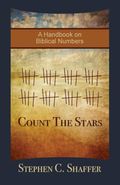
One last bonus piece about Count the Stars, but I like you guys so much.
Thank you all for your support during book launch week. It has been a gift to us. We will be back to our regularly scheduled monthly posts next week, where I will share some exciting news about upcoming projects.
If someone shared this issue with you and you would like to receive it in your own inbox, you can sign up by clicking here.
Feeding the Five Thousand
The feeding of the five thousand is one of only two miracles recorded in all four Gospels. The other is the resurrection of Jesus from the dead. Only Matthew and Mark record both feeding miracles and in both, the feeding of the five thousand takes place first.
Going back all the way to chapter one, we can begin by looking at the immediate context for this event: What is happening right before this story that helps us understand it?
In Matthew, Mark, and Luke, this event takes place right after Jesus has learned about the death of John the Baptist (Mt. 14:1-12; Mk. 6:14-29; Luke 9:7-9). In Matthew and Mark, the event itself is recorded immediately before the miracle (Mt. 14:1-12; Mk. 6:14-29), whereas in Luke, Jesus has only just heard about it (Luke 9:7-9). In John, Jesus has healed someone who was paralyzed for thirty-eight years, before entering into a controversy about his authority to heal on the Sabbath (John 5). In three out of four Gospels, the feeding of the five thousand follows right on the heels of the death of John.
The meal that Jesus sets for five thousand men (not including the women and children, so possibly more than ten thousand people) is set alongside the exclusive banquet of Herod. Herod has a birthday feast for only his high officials and military commanders (Mk. 6:21). He longs to be entertained, and when he is pleased, he ends up taking the life of John as a “gift” for the daughter of Herodias (Mk. 6:22-24). Herod prepares a feast in his palace and takes life, instead of giving it. By contrast, Jesus is filled with compassion (Mk. 6:34). He sees the people hungry and in need. These are not the high and mighty of Herod’s court, but the crowds of everyday people who want to see Jesus. When the disciples tell Jesus to send these people away, Jesus responds instead by commanding the disciples to feed them. When the disciples claim they cannot, citing that they only have five loaves and two fish (a young boy’s lunch), Jesus takes what is offered and multiplies it to feed thousands. Jesus prepares a feast in the wilderness and instead of taking life, he gives it by feeding the hungry people. The context of this passage already draws the contrast between Jesus and Herod, between the meal and ways of this world, and the meal and way of Jesus.
Where does this take place? It takes place in Galilee, near Bethsaida (Luke 9:10). Jesus goes to a deserted place (Mk 6:31), heads up the mountain (John 6:3), and has the people sit down on the green grass (Mk 6:39). The wilderness, green grass, and the mountain all connect this meal miracle to other passages in the Bible. While the people were in the wilderness, God rained down manna from heaven every day to feed them. God provided food for the hungry — their daily bread. Sitting on “green grass” (Mk. 6:39) is a specific detail that calls to mind Psalm 23 — “The Lord is my shepherd, I lack nothing. He makes me lie down in green pastures, he leads me beside quiet waters” (Ps. 23:1-2). When Jesus feeds the five thousand, he is the Lord providing manna in the desert, he is the Good Shepherd who feeds his lambs. The location, placement within the narrative, and surrounding details all draw this passage into conversation with various feeding miracles in the Bible.
However, what do the numbers in the passage tell us? At the end of the miracle, Jesus feeds five thousand men (not counting the women and children — Mt. 14:21). Five thousand is a fairly rare number in the Bible. It is the weight of Goliath’s armor in shekels (1 Sam. 17:5). It is the amount of men that Joshua used to set an ambush between Bethel and Ai (Joshua 8:12). When the Benjamites are punished for murdering the Levite’s concubine, after the Benjaminites are defeated at Gibeah, another five thousand are killed as they flee toward the wilderness (Judges 20:45). When David calls for gifts to be given for the building of Solomon’s temple, the leaders of the families give five thousand talents and ten thousand darics of gold (1 Chr. 29:7). Though interesting, none of these other instances of five thousand have obvious connections with this story. However, there are two other times where “five thousand” is used that may shed a bit more light.
In Acts 4, Peter and John are arrested and jailed for preaching about Jesus Christ. Though they are brought before the Sanhedrin for preaching of Jesus’ resurrection, “many who heard the message believed; so the number of men who believed grew to about five thousand” (Acts 4:4). The word goes forth and five thousand believe.
Toward the end of 2 Chronicles, King Josiah discovers the book of God’s law in the temple. When he reads it, he tears his robes and wants to discover just what he must do, because those who have gone before them have not keep God’s word (2 Chr. 34:19-22). In response to the advice of the prophetess Huldah, Josiah renews the covenant and calls upon the entire nation to celebrate the Passover. Josiah, his officials, and the Levites provide sacrificial animals for the families to celebrate the Passover. In this list, we hear, “Also Konaniah along with Shemaiah and Nethanel, his brothers, and Hashabiah, Jeiel and Jozabad, the leaders of the Levites, provided five thousand Passover offerings and five hundred head of cattle for the Levites” (2 Chr. 35:9). When the people are like sheep without a shepherd (as they have been for generations), Josiah steps up to lead them in covenant faithfulness and provides them with food to celebrate the Passover meal. While Josiah’s personal generosity is greater (2 Chr. 35:7), some families contribute a total of five thousand offerings for Passover meals.
The repetition of “five thousand” and the presence of a meal point to a connection between these passages, which is strengthened by the fact that the feeding of the five thousand takes place when, “The Jewish Passover Festival was near” (John 6:4). The connection is further strengthened by the language around the meal itself. “Taking the five loaves and the two fish and looking up to heaven, he gave thanks and broke the loaves. Then he gave them to his disciples to distribute to the people. He also divided the two fish among them all” (Mk. 6:41). These words — take, give thanks, broke, gave — are used again at the Passover meal, when Jesus will eat with his disciples and transform and fulfill the meal by proclaiming that it points to his death and resurrection: “While they were eating, Jesus took bread, and when he had given thanks, he broke it and gave it to his disciples, saying, “Take it; this is my body” (Mk. 14:22). Jesus feeding five thousand connects to Josiah and covenant renewal and, together, they connect to the Passover and the Lord’s Supper.
Alongside “five thousand,” there are other significant numbers in this passage. While there could be important work around the two hundred denarii worth of bread to be bought (Mk. 6:37) or the fact that Jesus has them sit down in groups of hundred and fifties (Mk. 6:40; Lk 9:14), the number of loaves, fish, and leftovers stand out because they are different than what we will see in the later feeding of the four thousand.
When Jesus asks how much supplies they have for the meal, the disciples reply that they only have five loaves and two fish (Mk. 6:38; Mt. 14:17; Luke 9:13). We might try to find the significance of these numbers by combining them (5+2 = 7), as seven is the number of completeness and parallels the amount of supplies for the later feeding of the four thousand (seven loaves — Mk. 8:5; Mt. 15:34). In this sense, the five loaves and two fish could communicate that, though they have too little in the eyes of the world, what they brought is enough for what Jesus planned to do. Jesus took their full offering and turned it into abundance.
The twelve baskets of leftovers should also make us think of the people of Israel (twelve tribes). When we see the details of the setting (Galilee) alongside the timing (Passover) and the significance of the numbers (5000, 5+2, 12), a picture begins to emerge. In the feeding of the five thousand, Jesus is the one who feeds and shepherds the people of Israel. He sets a banquet for the beloved people of God. They are cared for and welcomed by the Lord Jesus. This miracle of multiplication happens for the hungry of Israel, who are like sheep without a shepherd, and who long to be fed. Jesus not only gives them enough for daily bread (like manna in the wilderness), but an abundance that provides leftovers for the people of God.
This connection to Israel and the Passover also suggests that there may also be wisdom in thinking of the five loaves and two fish separately. Some of the early church fathers suggested that the five loaves may represent the five books of the Law. (For an example of this view, see Augustine, Sermon 80 on the New Testament. The views on the significance of the two fish vary — monarchy and priesthood, love of God and love of neighbor, the two tables of the Law, the two tablets of the Law, the two natures of Christ, the two ways he feeds the church. I am not settled on a particular interpretation) If so, the Israel connection is only strengthened. They come hungry. All that they have is the Law, but it is enough for Jesus. He takes it and multiplies it to feed the people, with much left over. In some ways, this is a fitting way to read what Jesus is doing in the Sermon on the Mount — he is taking the five loaves of the Law, then blessing and giving them to the people in a way that feeds and nourishes life (Mt. 5-7).
(If you want to learn about how this compares to the feeding of the four thousand, you will need to check out the chapter, "Loves, Fishes, and Baskets" in Count the Stars)
Thank You
We appreciate your prayers for the work we are doing in providing theological resources for the church. One of the best ways to support us to buy our books and tell your friends to do the same. However, if you'd like to contribute in other ways, you can always put a few dollars in the tip jar to get me a coffee.
From the desk of
Stephen C. Shaffer
Author, Pastor-Theologian
www.penielpress.com
Click Here to Read on the Web